Freedom: Aboveground Dialogue
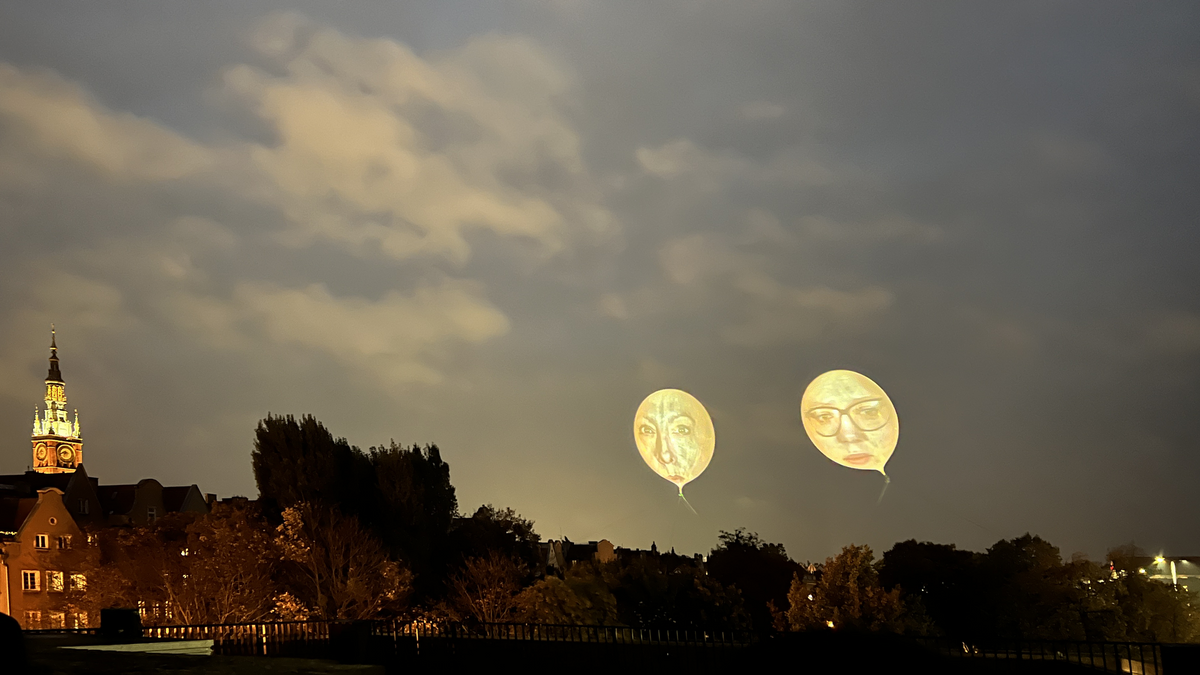
Just a few days after I moved to Gdańsk with the intention to ponder the meaning of freedom, I saw a poster for an art exhibition exploring that very topic Freedom: Aboveground Dialogue/Wolność: Dialog Nadziemny by Krzysztof Wodiczko. It had an intriguing image of disembodied heads floating above the city, so of course I had to check it out.
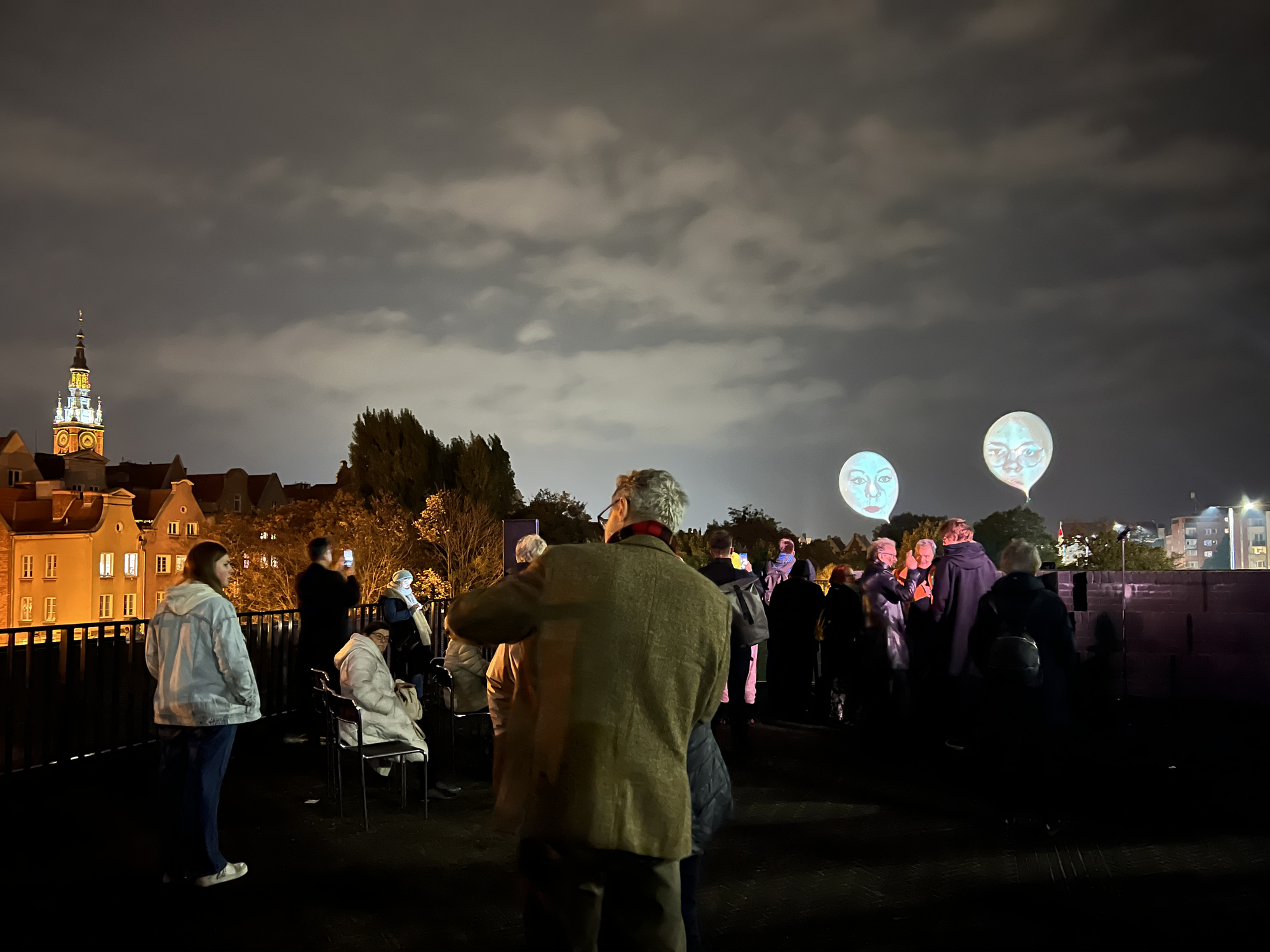
The show was in fact a one-time outdoor event presented by the Contemporary Art Center ŁAŹNIA and hosted by the Gdańsk Shakespeare Theater. The disembodied heads were videos projected on two large balloons, floating above the roof terrace. In each video the speaker talked about their life experience dealing with topics of freedom, responsibility, identity, societal expectations, motherhood, immigration, and so on. Once the technical difficulties were ironed out–and that took quite a while–the whole experience had a haunting, surreal effect. The balloons swayed with the wind, sometimes losing the image, then regaining it. The show started right after sunset, so around us the sky darkened, bringing the projection into sharper and sharper focus. The words resonated clearly from large speakers.
Of the dialogues, the ones I found most compelling were those between women. Basia and Patrycja talked about the responsibility put on them by their work. Patrycja, being a generation older than Basia, had a more traditional approach to her workplace. Much was expected of her as a manager, and she often felt obligated to do the work that her employees messed up but which she didn’t feel comfortable asking them to correct. She felt a little ashamed that she had to speak for the employer, but also wished that her employees would step up more. Basia challenged the need to achieve success at work at the cost of personal life and happiness, an expectation imprinted on her from childhood. She called it a great lie, the way that work deprives us of life, getting in the way of fully experiencing that which we live through.
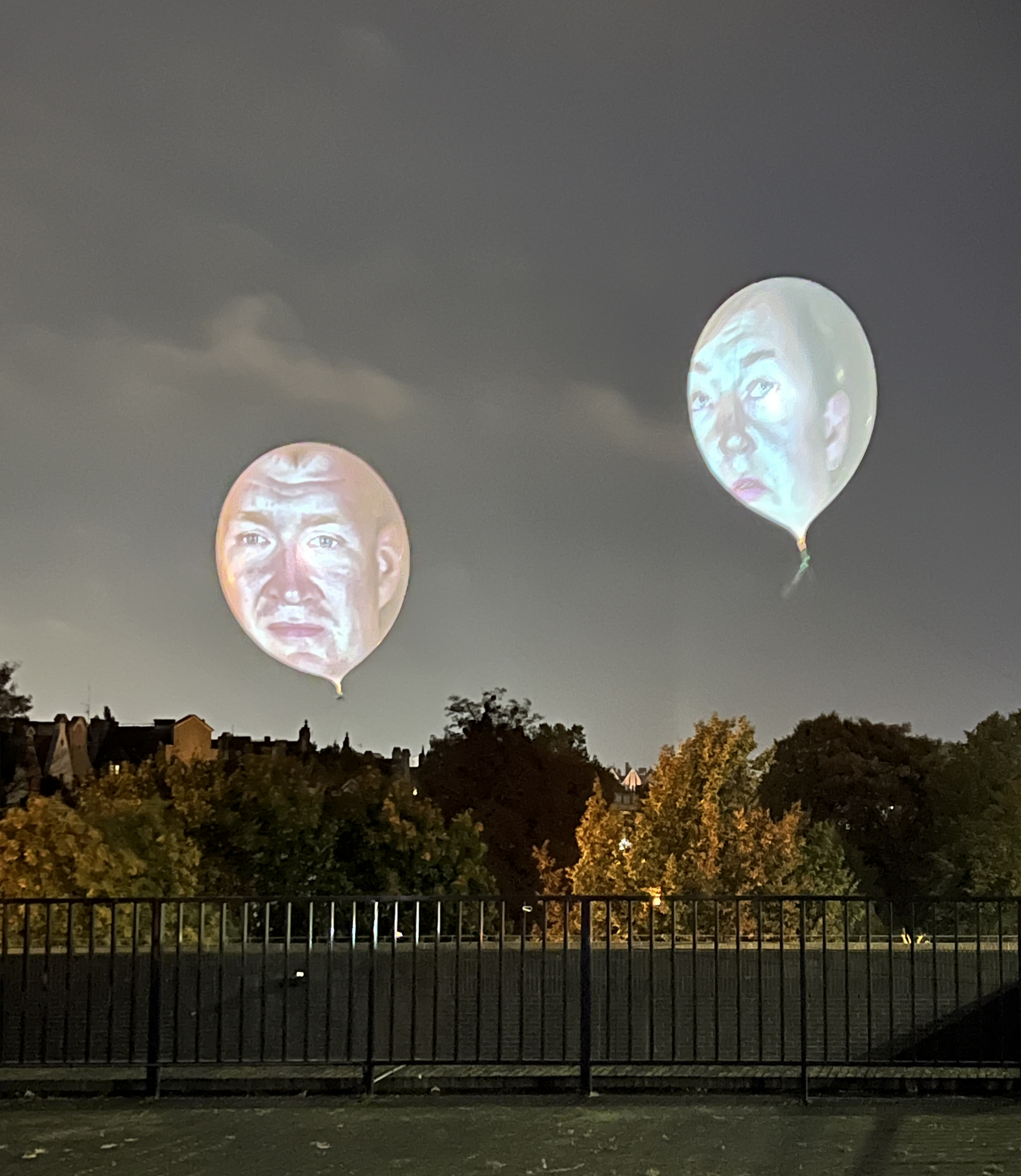
The most heartbreaking were the testimonies of mothers. There was Wiola speaking to her son Bartłomiej, who has special needs. Even though he is able to advocate for himself and earn a living, Wiola feels that her needs come second, and always will. Nadzieja and Aneta also talked about the obligations of motherhood, particularly of themselves as Polish mothers, though Nadzieja wasn’t even Polish. The paragon of Polish motherhood is the Virgin Mary herself, which is a hard ideal to live up to. That ideal of an all sacrificing, ever suffering mother was taken as a given in the past, and only recently began to be questioned. Nadzieja was very vocal about that, calling out Aneta: “You say a lot of ‘I had to’.” to Aneta’s story of raising a special needs daughter by herself after her husband left her. After all, what about the father of the child? He also “had to.” “I don’t want to have to. My mom had to. I don’t want that. I don’t have to.”
I thought of my own mother, who at the age of 39 left this country, family, friends, and everything that she’d ever known, and moved to the United States with my sister and me, in search of a better life. She wouldn’t have done it just for herself, but she didn’t see a good future for us in Communist Poland, so she “had to” leave. It is to a large extent because of that sacrifice that I am in the privileged position of taking this sabbatical. My mother’s action allowed me to get a great education, which led to well paying jobs and eventually a healthy saving’s account.
I also wonder if these high expectations of motherhood don’t lead more and more women to make the choice to stay child free. Seeing all the things my mother did for my sister and me made me feel that I could never do the same. And even if I could, I don’t think I’d want to! Having your own needs subsumed by those of another person–however adorable–just seemed like a raw deal. I’ve talked to enough mothers to understand that your thinking changes when you have a child, but I didn’t particularly want my thinking to change. The experience of the Aboveground Dialogue showed that other people also see motherhood, as well as work obligations, and societal expectations as obstacles in their pursuit of self fulfillment and freedom. Certainly being free from those obligations makes what I’m doing much easier.
Poland has a birth rate of 1.38 per woman, well below the replacement level of 2.4. It also makes almost all abortion illegal. It is as if lawmakers see coercion as the way to prevent the population decline. From all I’ve observed, that is not working. Another way for a country to boost its population is through immigration. Marta and Jan, who is a catholic priest, discussed the situation on Poland’s border with Belarus. Thousands of refugees from Arab countries and Africa are stuck at the border, trying to get into the EU. Poland is not letting them in. This is contrasted with the openness with which the country welcomed the Ukrainian refugees. It is impossible to ignore that it is the brown and black, as well as predominantly muslim people who are barred from entry, while white and predominantly christian immigrants are welcomed with open arms. Marta and Jan’s conversation reflected the soul searching that many Poles are currently doing, trying to square Poland’s christian charity and its hospitality with a need to control the border. ”A guest at home is God at home (Gość w dom to Bóg w dom)” is an old Polish saying.
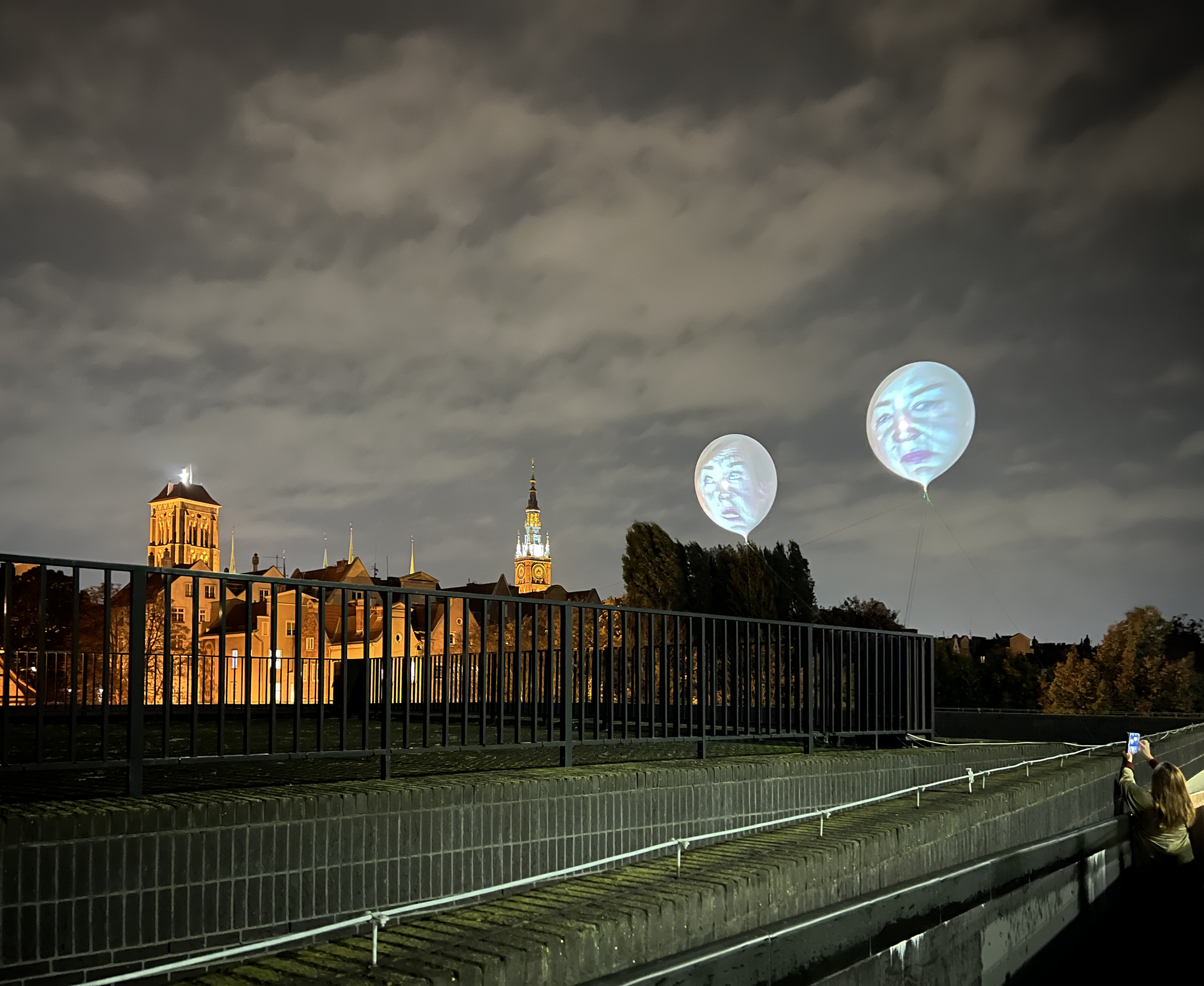
Overall, the artist successfully presented the theme of freedom from different perspectives–from the very basic need of refugees just to survive, to a more nuanced need for free self expression. Afterall, you cannot have liberty without life, or to pursue happiness without liberty.